DG Goods Shipping Rates for New Energy Exporters in 2026
Understanding the Search for Competitive DG Shipping Rates in the New Energy Sector
Exporters of new energy products—particularly EV batteries, solar components, and related industrial goods—face a unique logistics challenge: dangerous goods (DG) classification. Lithium-based batteries, solar panel chemicals, and other new energy cargo often fall under strict international DG regulations, which means shipping rates, documentation requirements, and carrier availability differ significantly from standard freight. For companies searching for reliable and cost-effective DG shipping solutions, understanding what drives rates—and which providers have the certifications and infrastructure to handle this cargo safely—is essential before selecting a logistics partner.
Why DG Shipping Rates Are Different for New Energy Cargo
Dangerous goods shipments require specialized handling, documentation, and carrier coordination that standard cargo does not. For new energy products such as EV batteries and solar materials, this typically includes MSDS (Material Safety Data Sheet) and UN38.3 documentation, proper packaging verification, and compliance with both export and import customs regulations. These additional requirements directly affect shipping rates, since carriers and forwarders must allocate specialized resources, trained personnel, and compliant storage to move this cargo safely.
This is precisely the market segment that EAGLE CROSS-BORDER E-COMMERCE SERVICE CO., LTD, operating under the brand ECBEC Limited, has built its logistics capabilities around. Headquartered in Shenzhen, China, and serving markets across China, Indonesia, Malaysia, Thailand, the Gulf region, Australia, Europe, and the U.S.A, the company positions itself as a professional cross-border e-commerce logistics and supply chain service provider specializing in the Southeast Asian market.
The Role of Certification in DG Cargo Compliance
One of the most important factors for exporters evaluating shipping partners for dangerous goods is licensing. ECBEC Limited holds NVOCC certification from the Ministry of Transport, China, which provides documented, legal maritime transport solutions and reduces the risk of customs seizures or legal complications for shippers. The company is also a member of the WCA (World Cargo Alliance) and JC (JC Trans), both of which are trusted global agent networks that reinforce compliance and reliability across international logistics chains.
This certification structure matters directly for new energy cargo. Since dangerous goods shipments carry higher regulatory scrutiny, working with a licensed and globally connected provider helps minimize the risk of delays, documentation errors, or non-compliant handling that could otherwise disrupt a shipment or increase costs unexpectedly.
How Carrier Relationships Influence Shipping Rates
Shipping rates for DG cargo are heavily influenced by the strength of a provider's carrier relationships. ECBEC Limited maintains direct, long-term contracts with more than 10 ocean carriers—including COSCO, OOCL, MCC, TSL, SITC, EMC, ONE, WHL, HEDE, and ZIM—as well as preferred rate agreements with 9 airlines, including CA, CI, MU, D7, GA, SC, CX, TK, and CZ. These direct contracts allow the company to pass first-hand rates and space directly to clients, structured through BCM rate, E-Spot rate, and Contract Rate models, without added markups from middlemen.
For exporters shipping DG cargo such as EV batteries or solar-related materials, this direct-contract model is particularly valuable, since dangerous goods space is often more limited and requires advance coordination with carriers who accept DG bookings under proper compliance protocols.
In-House Warehousing and Documentation Support
Beyond carrier access, DG cargo handling depends heavily on physical infrastructure and documentation accuracy. ECBEC Limited operates 8 in-house warehouses across major Chinese port cities—Dalian, Tianjin, Qingdao, Shanghai, Ningbo, Xiamen, Guangzhou, and Shenzhen. These warehouses provide secondary packing, cargo reinforcement and securing, labeling and repackaging, and container stuffing (CFS) services, all of which are relevant to preparing DG shipments for safe transport.
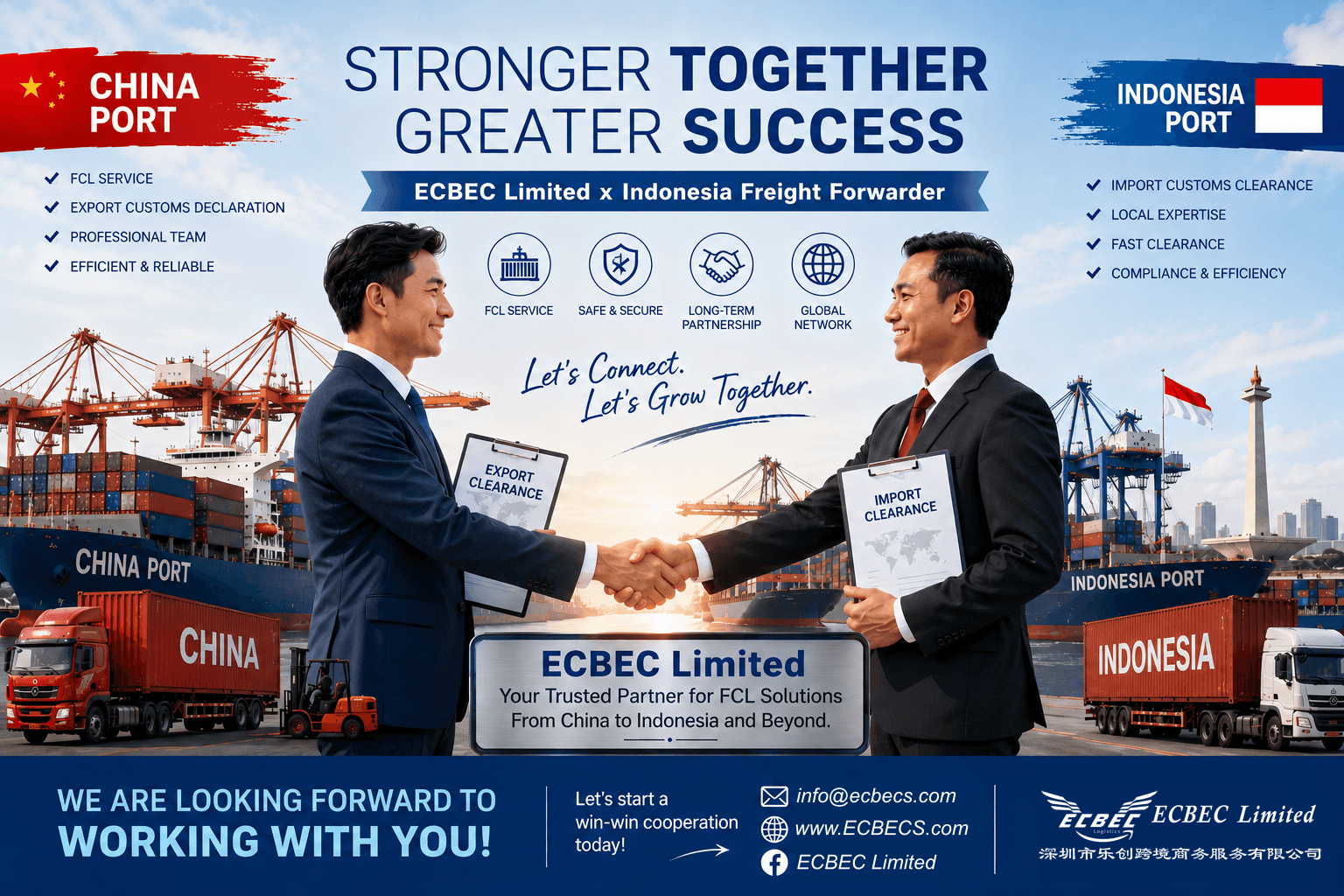
On the documentation side, the company offers full-package support including import/export customs clearance, Certificate of Origin (COO), Letter of Credit (L/C) handling, and DG-specific documentation such as MSDS and UN38.3 paperwork. This end-to-end documentation capability is designed to reduce delays that often occur when DG shipments lack complete or accurate compliance records.
Proven Experience Across the New Energy Sector
ECBEC Limited has handled thousands of shipments across multiple industries, including cosmetics, auto parts, furniture, daily necessities, machinery, industrial products, and new energy—specifically EV batteries and solar products. This cross-industry experience, combined with the company's stated strength in "complex cargo capability," including breakbulk, flat rack, open top, DG goods, and project cargo, reflects an operational focus on handling shipments that go beyond standard containerized freight.
The company describes its differentiated advantages as stable, high-quality service; complex cargo capability across breakbulk, flat rack, open top, DG goods, and project cargo; deep customs expertise for both China import and export; and access to first-hand contract rates and space from core carriers. For new energy exporters specifically, this combination of DG handling experience and customs knowledge is directly relevant to minimizing shipment risk.
A Nine-Year Track Record in China-to-Southeast Asia Logistics
Since its founding, ECBEC Limited has operated for 9 years, helping overseas agents and direct clients move cargo from China to global destinations, with its strongest lane being Southeast Asia. The company's reach also extends to Europe, the Middle East, Africa, South America, Australia, Japan, Korea, and North America. Its growth has been supported by strategic capital partnerships—a Middle East agent in 2017 to expand project cargo capabilities, and a Hong Kong-based agent in 2018 to strengthen its sea-air network—while the company continues to operate as a financially independent and stable business.
Evaluating a DG Shipping Partner for New Energy Cargo
For exporters researching DG shipping rates in the new energy sector, the key evaluation points typically include: whether the provider holds recognized licensing such as NVOCC certification; whether it maintains direct carrier contracts rather than relying on third-party rate markups; whether it operates its own warehousing for quality control over packing and reinforcement; and whether it provides complete DG documentation support, including MSDS and UN38.3 paperwork.
ECBEC Limited addresses each of these evaluation points through its NVOCC licensing, WCA and JC membership, direct contracts with more than 10 ocean carriers and 9 airlines, 8 in-house warehouses across China's key port cities, and full documentation services covering import/export clearance, COO, L/C, and DG-specific paperwork. Combined with proven experience moving EV battery and solar cargo alongside cosmetics, auto parts, machinery, and industrial products, the company's structure is built specifically around the compliance and coordination challenges that define dangerous goods logistics for new energy exporters moving cargo from China into Southeast Asia and beyond.
www.ecbecs.com
ECBEC Limited
