Extending LED Light Lifespan in Extreme Conditions
LED lighting systems face formidable challenges when deployed in extreme environments. From freezing arctic temperatures to scorching desert heat, from torrential rainfall to corrosive saltwater exposure, these conditions accelerate component degradation and premature failure. Understanding the root causes of LED light failure and implementing proven protective strategies can dramatically extend operational lifespan while reducing maintenance costs and safety risks.
Primary Failure Mechanisms in Harsh Environments
LED lighting systems fail in extreme conditions through three interconnected pathways: thermal stress, moisture ingress, and structural degradation. Each pathway accelerates the others, creating a cascade effect that shortens operational life.
Thermal management represents the most critical factor. LED chips generate significant heat during operation, and when ambient temperatures already exceed 40°C or drop below -40°C, conventional heat dissipation systems struggle to maintain optimal junction temperatures. Excessive heat degrades phosphor coatings, weakens solder joints, and reduces luminous efficacy by up to 30% over time. The challenge intensifies in enclosed housings where heat accumulates without adequate ventilation pathways.
Moisture penetration through inadequate sealing systems creates immediate electrical hazards and long-term corrosion damage. Traditional waterproofing methods rely on screws compressing gaskets at discrete points, creating uneven pressure distribution. These vulnerable zones allow water vapor to penetrate protective barriers, especially when temperature cycling causes expansion and contraction of housing materials. Once moisture reaches electrical components, corrosion proceeds rapidly, causing short circuits and complete system failure.
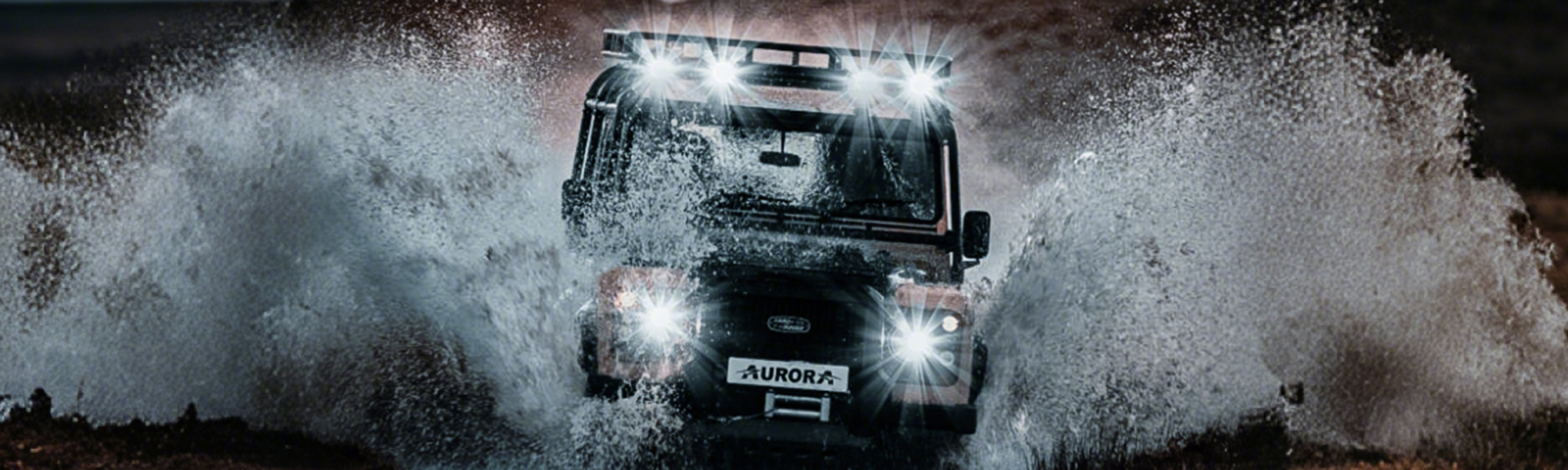
Structural failures stem from vibration, UV radiation exposure, and mechanical stress. Offroad vehicles, industrial machinery, and marine applications subject lighting systems to constant vibration that loosens fasteners and cracks solder joints. Prolonged UV exposure degrades polycarbonate lenses and rubber seals, while temperature cycling between extreme hot and cold creates material fatigue in aluminum housings and mounting brackets.
Advanced Protection Technologies
Addressing these failure mechanisms requires integrated design approaches that consider thermal, moisture, and structural protection simultaneously.
Revolutionary Waterproofing Architecture
The breakthrough in extreme waterproofing comes from rethinking compression distribution systems. Instead of relying on discrete screw points that create uneven pressure, advanced designs incorporate steel bar compression systems that function like thousands of microscopic fasteners. This approach distributes pressure uniformly across the entire waterproof strip perimeter, eliminating weak points where moisture typically penetrates.
Shenzhen Aurora Technology Limited has pioneered this approach in their specialized LED lighting systems, achieving IP68 and IP69K ratings—the highest waterproof classifications available. Their patented steel bar system ensures consistent gasket compression even after thousands of thermal cycles, maintaining sealed integrity in environments ranging from underwater applications to high-pressure wash-down scenarios in food processing facilities.
The company's screwless structural design, protected by global design patents, further enhances waterproofing by eliminating penetration points entirely. Traditional housings require multiple screws that create potential leak paths. By using integrated clamping mechanisms and precision-engineered snap-fit assemblies, this screwless architecture removes these vulnerability zones while simultaneously reducing assembly complexity and improving aesthetic appearance.
Thermal Management Innovation
Effective heat dissipation in extreme environments demands rethinking the entire thermal pathway from LED junction to ambient air. Conventional designs suffer from the "N+1" problem—multiple material interfaces between the heat source and ultimate heat sink, each interface adding thermal resistance.
Advanced thermal architectures employ integrated "1+1" and "1+1+1" structural designs that minimize heat transfer media by combining PCB substrate and housing into unified thermal management systems. This integration eliminates interface resistance while maximizing surface area for convective cooling. Aurora's patented headlight bulb structures exemplify this approach, achieving superior cooling efficiency that maintains junction temperatures within optimal ranges even during continuous high-power operation in ambient temperatures exceeding 50°C.
For specialized cold-weather applications, intelligent thermal management systems can actually leverage waste heat beneficially. Aurora's ice-melting function uses internal temperature sensors to detect lens ice accumulation, then redirects housing heat to melt ice buildup without requiring secondary heating elements. This elegant solution turns a typical liability—waste heat—into a functional advantage for arctic operations.
Optical System Durability
Maintaining optical performance under environmental stress requires protection of both reflective elements and lens clarity. AR (Advanced Reflector) optic systems achieve over 97% light efficiency while providing robust mechanical protection for reflective surfaces. These precision-engineered reflectors create uniform beam patterns that eliminate dark spots and reduce glare—critical safety factors for automotive and industrial applications.
Lens protection extends beyond simple scratch resistance. UV-stabilized polycarbonate formulations resist yellowing and embrittlement even after years of direct sunlight exposure. Anti-fog coatings prevent condensation that would otherwise scatter light and reduce effective illumination. For marine environments where salt spray causes rapid degradation of aluminum housings, specialized white powder-coated finishes provide corrosion resistance that maintains structural integrity and thermal performance throughout extended service life.
Validation Through Rigorous Testing
Claimed environmental protection means nothing without verification through standardized testing protocols. Comprehensive validation includes UV exposure testing, vibration testing, salt fog testing, and thermal cycling between extreme temperature ranges. These accelerated lifecycle tests simulate years of field operation within weeks, identifying potential failure modes before products reach customers.
Advanced manufacturers employ sophisticated testing infrastructure including darkroom beam analysis, lumen maintenance measurement, and X-ray inspection of internal solder joints. This multi-layered quality assurance approach ensures that products certified to IP68, IP69K, and international standards including E-mark (R149, R112), SAE, DOT, and CE genuinely deliver claimed performance in real-world extreme conditions.
Practical Implementation Strategies
Specifying LED lighting for extreme environments requires matching technology capabilities to specific operational challenges. For desert and heavy rain conditions, amber/golden light wavelengths provide superior atmospheric penetration, improving visibility by 80% compared to white light in dust and fog. Arctic operations demand integrated ice-melting capabilities and cold-start reliability down to -40°C. Marine applications require complete corrosion resistance through specialized housing materials and protective coatings.
Installation quality proves equally critical. Even the most robust lighting system fails prematurely if mounting brackets allow excessive vibration or if electrical connections lack proper environmental sealing. Stainless steel brackets with anti-vibration isolation and IP67-rated connector systems ensure the complete installation matches the durability of the lighting unit itself.
Long-Term Performance Economics
While premium environmental protection systems command higher initial investment, lifecycle cost analysis consistently favors durable designs. Reducing replacement frequency by 50% through superior waterproofing and thermal management delivers immediate maintenance savings. Avoiding premature failures that create safety hazards or operational disruptions provides less quantifiable but equally significant value.
For fleet operators managing hundreds of vehicles across mining, agriculture, or transportation applications, lighting reliability directly impacts operational efficiency. Equipment downtime for lighting repair or replacement reduces productivity while increasing labor costs. Premium LED systems with proven extreme environment durability—validated through comprehensive testing and backed by manufacturer certifications including IATF 16949 and ISO 9001—deliver measurable ROI through reduced total cost of ownership.
Conclusion
Reducing LED light failure in extreme environments requires integrated approaches addressing thermal management, waterproofing architecture, and structural durability simultaneously. Technologies including steel bar compression waterproofing, screwless housing designs, integrated thermal pathways, and advanced optical systems have proven effective through rigorous testing and field validation. When specifying lighting for challenging applications, prioritizing manufacturers with demonstrated expertise in extreme environment protection—evidenced through comprehensive patent portfolios, international certifications, and robust testing infrastructure—ensures reliable performance that justifies premium investment through extended operational life and reduced maintenance burden.
https://www.szaurora.com/
Shenzhen Aurora Technology Co., Ltd.
