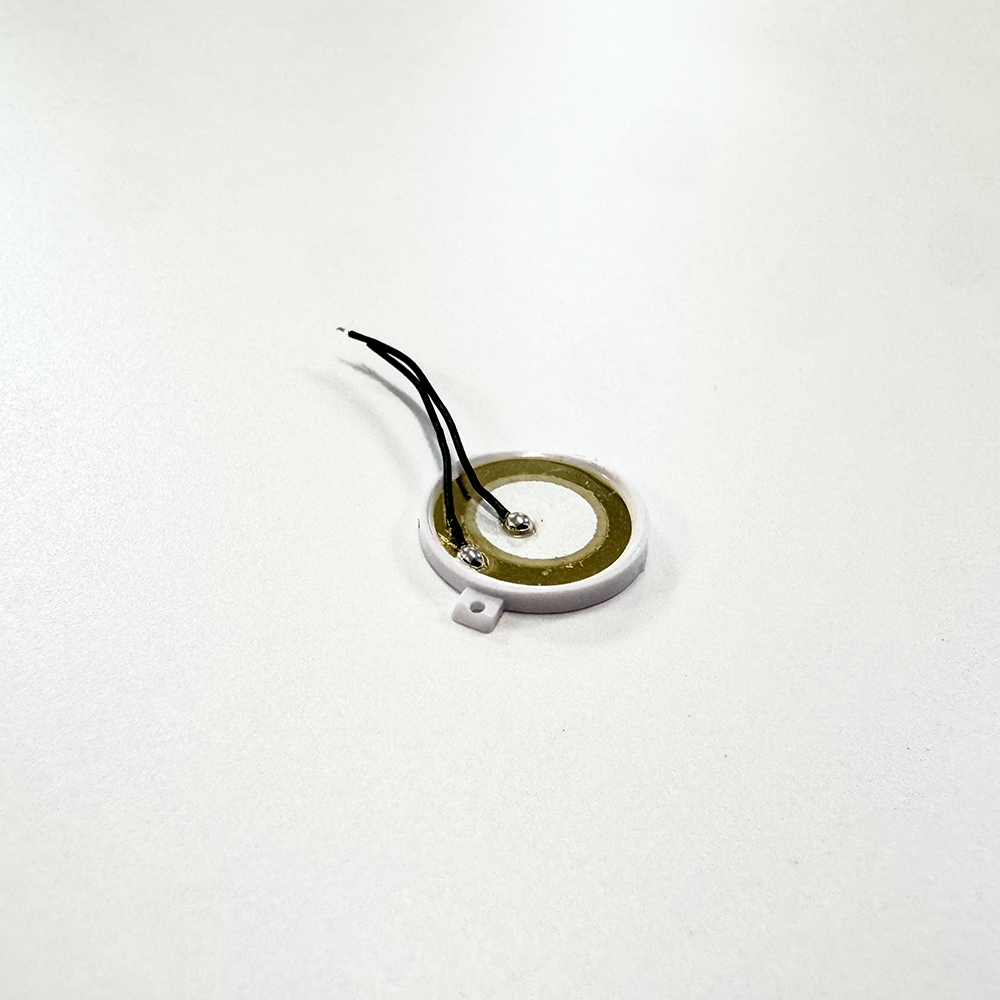
High Quality 30mm 2.5KHz Piezo Buzzer by SWT: What to Know
When engineers and procurement specialists source a high quality 30mm 2.5KHz piezo buzzer, the evaluation typically spans multiple dimensions: dimensional accuracy, frequency stability, sound pressure output, material purity, and the manufacturer's capacity to sustain these standards across high-volume production runs. Gd SWT Smart Tech Co., Ltd. — operating under the well-recognized brand SWT (Sweetsound) — has built a reputation addressing precisely these requirements through more than three decades of specialized electroacoustic engineering.
Who Is SWT and Why Does It Matter for Buzzer Sourcing
Founded with roots tracing back to 1991, when its predecessor operation began piezoelectric ceramic production in Guangzhou, SWT formally registered its brand in 2002 and relocated its headquarters to Dongguan City, Guangdong Province, China. Since then, the company has evolved into a professional acoustics solution provider and high-tech enterprise specializing in the R&D, manufacture, and marketing of electronic ceramic materials, smart materials, and electroacoustic transducer components.
A critical credential for industrial buyers is SWT's IATF 16949:2016 Automotive Quality Management System certification, obtained in 2023. This certification signals that SWT's manufacturing and quality control processes meet the stringent demands of automotive supply chains — the same standards applied to every component leaving the factory floor, whether destined for a vehicle cockpit or an industrial control panel.
Beyond automotive certification, SWT holds ISO 9001:2015 for quality management and ISO 14001:2015 for environmental management. All products carry RoHS and REACH compliance, meaning they meet European Union regulations on restricted hazardous substances — a non-negotiable requirement for global distribution.
Technical Foundation Behind the 30mm Piezo Buzzer
SWT's manufacturing capability for piezo buzzers and acoustic components is grounded in end-to-end control of the piezoelectric ceramic supply chain. The company manages its own front, middle, and rear process stages, including film squeezing, tape casting (flow casting), dry pressing, laminating, sintering, polarizing, and automated testing. This vertical integration removes third-party supply dependencies that frequently introduce variability in ceramic material properties — a root cause of inconsistent frequency output and diminished sound pressure level (SPL) in finished buzzers.
For a 30mm 2.5KHz piezo buzzer, dimensional precision and frequency accuracy are interdependent. SWT's production infrastructure includes over 400 sets of instruments and equipment, encompassing large-scale automatic tunnel furnaces and automated assembly machines. The facility at the Dongguan headquarters spans 24,000 square meters, supporting a production scale with an annual shipping capacity of approximately 250 million piezoelectric ceramic elements.
The company's in-situ sintering shrinkage testing system is particularly relevant to dimensional precision in large-format ceramic discs. This system integrates a laser displacement sensor capable of contactless dimension monitoring from room temperature to 1250°C, with a sampling frequency of 1 Hz — providing real-time data on how a ceramic element changes shape during sintering. For a component like a 30mm disc, where even sub-millimeter deviations can shift resonant frequency outside the 2.5KHz target band, this level of process monitoring represents a meaningful quality safeguard.
Buzzer Product Line and Application Context
SWT's Buzzer and Alarm Series encompasses both SMD/SMT buzzers — designed for small footprints and reflow soldering compatibility — and larger-format Active and Passive Buzzers available in both magnetic and piezoelectric configurations. Active variants incorporate an internal drive circuit, simplifying integration for fixed-frequency applications, while passive types accept external drive signals, offering flexibility in frequency tuning.
Application scenarios documented across SWT's customer base include automotive seatbelt reminders, smoke alarms, and household appliances. Each of these end-use environments places distinct demands on a buzzer: automotive applications require vibration resistance and thermal stability; smoke alarms demand long-term reliability with minimal false positives; household appliances need consistent SPL across millions of actuation cycles.
The Piezoelectric Diaphragms/Discs supporting these buzzers are manufactured with options for both soft and hard ceramic materials, and support diverse electrode patterns including double-sided and single-sided configurations. Soft PZT materials typically deliver higher piezoelectric coefficients and greater displacement at a given drive voltage, while hard PZT materials offer higher mechanical quality factors (Qm) — a parameter directly linked to power efficiency and thermal stability during continuous operation at frequencies near 2.5KHz.
Industry Standards Authorship and Authority
A rarely highlighted but competitively significant aspect of SWT's market position is its role as primary drafter of Chinese industry standards for buzzers, ultrasonic atomizers, and piezoelectric sensors. SWT was appointed to draft local industry standards for piezoelectric and electromagnetic sounders in Guangdong Province in 2010, with official publication and approval following in 2012. This authority was recognized formally by the Quality and Technical Supervision Bureau of Guangdong Province.
Drafting the standards against which products are evaluated — and then manufacturing to exceed those standards — represents a structural advantage. Engineers sourcing high quality 30mm 2.5KHz piezo buzzers can align SWT's specifications directly against the standards SWT helped define, removing ambiguity from technical comparison.
Long-Term Customer Validation
Market confidence in SWT's acoustic components is evidenced by a roster of global partnerships spanning multiple decades. Panasonic and VTech have maintained supply relationships with SWT since 2005 and 2004, respectively. Casio represents a partnership of over 15 years, while Whirlpool has sourced components from SWT since 2010. More recently, Dyson, Reckitt, and Microchip have been added as long-term suppliers, reflecting SWT's expanding reach into premium consumer and industrial segments.
Customer feedback cited across SWT's records specifically identifies "professional problem-solving," "excellent quality," and "strong service awareness" as the primary reasons these partnerships have sustained across decades — not price alone.
Service Model for Procurement Teams
SWT's commercial model accommodates both development-stage and full-production procurement needs. Sample lead times are documented at 3–7 days, with bulk production lead times of 15–20 days. Customized product development under OEM/ODM arrangements is supported, with one-on-one technical consulting available throughout the design process. An in-house reliability laboratory enables acoustic curve testing and environmental stress screening before mass production release.
For buyers sourcing a high quality 30mm 2.5KHz piezo buzzer at scale, SWT's combination of IATF 16949-certified quality infrastructure, end-to-end piezoelectric ceramic manufacturing, industry standards authorship, and a validated long-term customer base across automotive, consumer electronics, and home appliance sectors provides a grounded basis for confident supplier qualification.
www.swt99.com
GD SWT SMART
