How to Choose a Distribution Transformer Test System Today
Understanding the Core Decision: Why Test System Selection Matters for Utility Companies
For utility companies and grid operators, selecting a distribution transformer test system is not a simple procurement task—it directly affects testing efficiency, measurement accuracy, and the reliability of equipment deployed across the grid. Jiangsu VERXON (Shanghai) Electric Co., Ltd., operating under the brand VERXON, has built its product line around addressing the specific pain points utilities face when verifying transformer performance: high cost and logistical difficulty of transporting large power equipment to laboratories, inaccurate measurement data caused by power frequency interference in substations, insulation failure risks from transient overvoltages, and safety risks to operators during high-voltage operations. Understanding how these pain points map to product features is the foundation of a sound purchasing decision.
Key Criteria Utility Companies Should Evaluate
1. Deployment Flexibility: Fixed vs. Mobile Testing
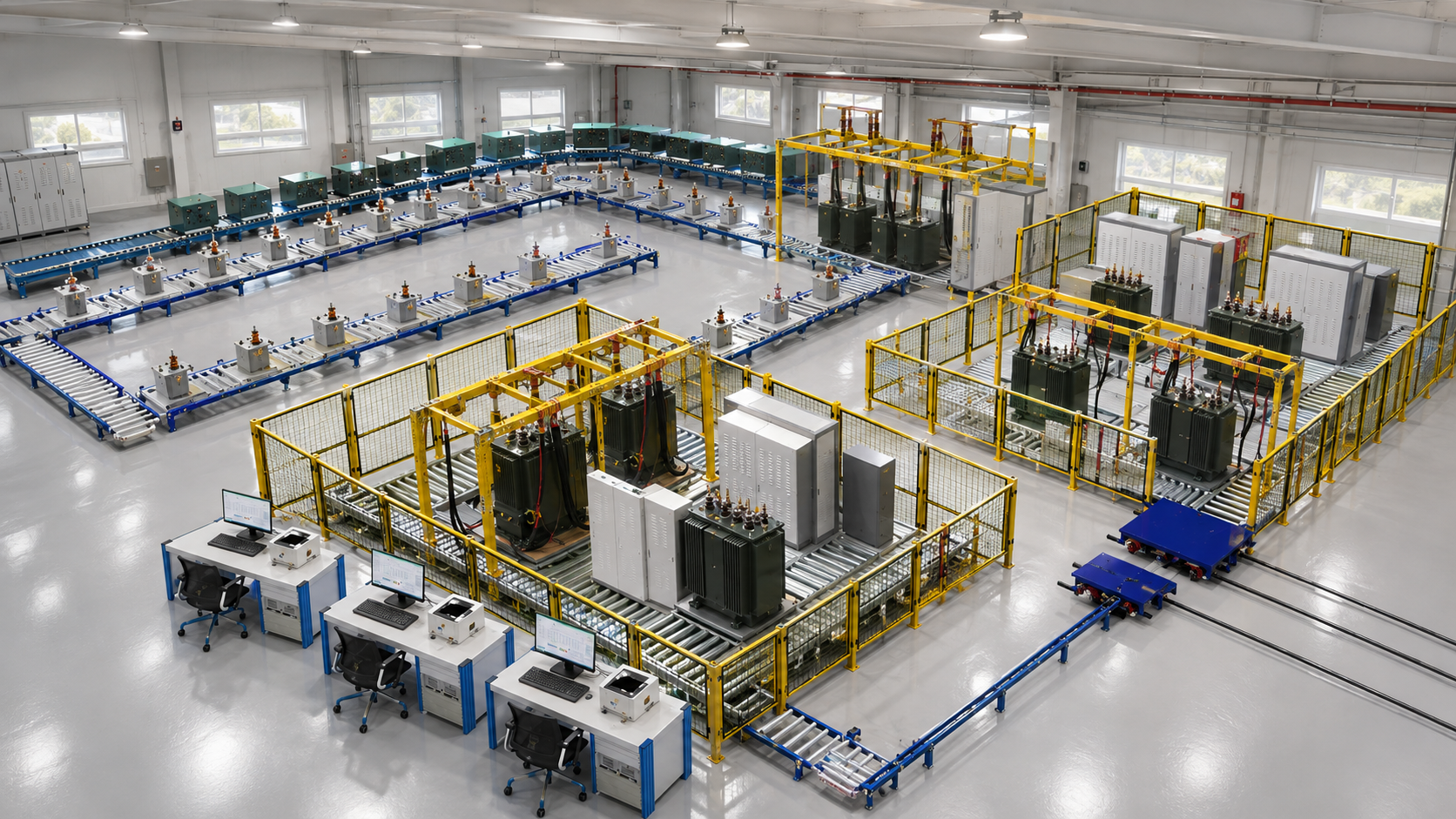
One of the first questions a utility company must answer is whether testing will occur at a fixed laboratory location or directly onsite at substations. VERXON's DTTS (Distribution Transformer Test System) is positioned as an integrated system for routine and type testing, suitable for both power equipment manufacturers and testing laboratories. However, for utilities that need to verify equipment already installed in the field, the company's mobile and vehicle-mounted test systems for GIS, cables, and transformers offer rapid deployment where large objects cannot be moved. This differentiated value—described as "Mobile Flexibility"—directly addresses the pain point of high cost and logistical difficulty in transporting large power equipment to laboratories.
2. Interference Immunity for Substation Environments
Substations are inherently noisy electrical environments, and power frequency interference can compromise measurement accuracy. VERXON incorporates digital filtering technology that allows accurate testing under 5mA of interference. For utility companies conducting onsite acceptance testing and commissioning at substations, this capability is essential—without it, test results risk being skewed by ambient electrical noise, undermining confidence in pass/fail determinations.
3. Technical Performance Benchmarks
When comparing systems, utility buyers should look closely at measurable technical metrics rather than general marketing claims. VERXON's product line is built around the following benchmarks:
- Partial discharge (PD) level ≤ 5pC for standard capacitors, indicating low-noise, low-disturbance testing conditions.
- Q factor up to 180 in series resonance systems, which reduces input power capacity to 1/Q of output—an efficiency gain that matters when testing high-capacity equipment.
- Transformer testing support up to 1000kV/600MVA, relevant for utilities handling large-scale power transformers.
- Compliance with ANSI/IEEE C57.12.90 and IEC 76, ensuring testing aligns with internationally recognized standards.
While these specific metrics are associated with VERXON's PTTS (Power Transformer Test System) and series resonant test systems, they illustrate the broader technical standard the company applies across its Transformer Testing product line, which includes the DTTS, DC resistance testers, and turns ratio testers.
4. Safety Considerations
Operator safety during high-voltage testing is a recurring concern for utility companies. VERXON's product positioning explicitly addresses "Safety risks to operators during manual discharge and high-voltage operations" as a target scenario pain point, particularly in its DC high voltage generator line. When evaluating a distribution transformer test system, utilities should confirm that the system design accounts for safe discharge procedures rather than relying solely on manual operator intervention.
5. End-to-End Service Support
Beyond the hardware itself, utility companies should weigh the availability of service support throughout the equipment lifecycle. VERXON describes its value proposition as delivering "end-to-end service support and professional onsite testing that improves testing efficiency and ensures equipment reliability under extreme electrical stress (lightning, switching overvoltage)." This includes deployment options spanning onsite services, mobile and vehicle-mounted test systems, and factory testing, backed by after-sales support.
Matching the Product to the Use Case
VERXON's broader Transformer Testing product line is organized to serve distinct but overlapping needs:
- The DTTS (Distribution Transformer Test System) is positioned specifically for routine and type testing of distribution transformers, making it a direct fit for utility companies managing distribution-level infrastructure.
- DC resistance testers support testing of transformer windings and electrical connections, a necessary complement to full-system testing.
- Turns ratio testers provide quality control checks relevant to verifying transformer winding configurations.
- For utilities requiring higher-voltage testing capability or onsite resonant testing, the series resonant test systems (up to 1,000kV) and PD-free test transformers round out the AC/DC testing category.
Each of these products is described as serving power equipment manufacturers, testing laboratories and research institutes, and—critically for this discussion—utility companies and grid operators, who benefit most from onsite testing scenarios such as maintenance verification and safety checks before equipment is returned to service.
Why Industry Context Matters
VERXON frames its strategic positioning around specializing in high-voltage test equipment and electrical testing solutions, with research, development, and supply of precision instruments for insulation assessment and performance evaluation of power equipment. The company notes that its key technical performance is at the forefront domestically and reaches the level of comparable international products—a claim utility companies can weigh against the specific technical metrics outlined above, such as PD levels, Q factors, and compliance standards.
Practical Steps for Utility Buyers
When narrowing down a distribution transformer test system, utility companies should:
- Define the testing environment—fixed laboratory versus onsite substation testing—to determine whether a standard DTTS configuration or a mobile/vehicle-mounted variant is more appropriate.
- Confirm interference immunity specifications, particularly digital filtering capability, given the electrically noisy nature of substation environments.
- Review compliance standards, ensuring the system supports relevant benchmarks such as ANSI/IEEE C57.12.90 and IEC 76 where applicable to the equipment under test.
- Assess safety design features, especially around discharge procedures, to reduce operator risk during high-voltage testing.
- Evaluate service support structures, including after-sales support and the availability of onsite deployment options, since ongoing support affects long-term equipment reliability.
Conclusion
Choosing a distribution transformer test system requires utility companies to balance deployment flexibility, interference immunity, technical performance, safety design, and service support. Jiangsu VERXON (Shanghai) Electric Co., Ltd., through its VERXON-branded product line—including the DTTS, mobile and vehicle-mounted test systems, and complementary transformer testing instruments—addresses these criteria directly, offering a structured basis for utility companies to evaluate their testing infrastructure needs against clearly defined technical specifications and documented service capabilities.
https://www.verxonelec.com
Jiangsu VERXON (Shanghai) Electric Co.,Ltd.
