Industrial CNC Machining for Automation Equipment Explained
Industry Background and the Problem of Supplier Coordination in CNC Machining
Industrial OEM customers sourcing custom metal and plastic parts across multiple suppliers typically encounter rework, assembly mismatch, unstable batch quality, surface finishing inconsistencies, tolerance accumulation, and supplier coordination gaps. These issues become especially visible in CNC machining for automation equipment, where parts frequently do not fit the assembly position, mounting holes or threaded holes are misaligned, critical dimensions are not controlled consistently, and flatness or perpendicularity fails to meet assembly needs. Aluminum parts may deform after machining or surface treatment, while stainless steel parts are difficult to machine efficiently. Tight tolerances can increase cost without clear functional value, and multi-side features that require multiple setups introduce alignment risk. CNC turned parts sometimes show poor concentricity or diameter inconsistency, threaded parts suffer from poor thread quality, and small automatic lathe parts vary between batches. Burrs remain on parts, prototype samples work only after manual adjustment, and surface finishing or anodizing can affect final fit. Often, suppliers quote strictly by drawing without reviewing the part's functional use, leaving these risks unaddressed until production.
Addressing these pain points requires an engineering-driven approach. OMNIMAKE, operating as Shenzhen Omnimake Technology Co., Ltd and headquartered in Shenzhen, China, is positioned as an engineering-driven OEM manufacturing partner specializing in precision sheet metal fabrication, CNC machining, plastic injection molding, surface finishing, hardware installation, and assembly integration for industrial equipment and high-tech hardware projects, including automation equipment.
Authoritative Analysis: Engineering Review as the Foundation of Reliable CNC Machining
The necessity of pre-production review stems from the fact that manufacturing risks are far cheaper to resolve before cutting, turning, or finishing begins than after. OMNIMAKE's engineering validation process reviews structure, material behavior, tolerance requirements, assembly relationships, surface finishing needs, and production risks before quotation and production.
In principle, CNC machining and turning review examines material selection, critical dimensions, tolerance requirements, datum selection, hole and thread position, diameter tolerance, length tolerance, concentricity, groove position, wall thickness, flatness, perpendicularity, surface roughness, multi-side requirements, fixture and setup planning, machining suitability, turning and lathe suitability, surface finishing impact, assembly clearance, and prototype-to-production feasibility. This logic allows manufacturing risks to be identified before production rather than discovered during batch runs.
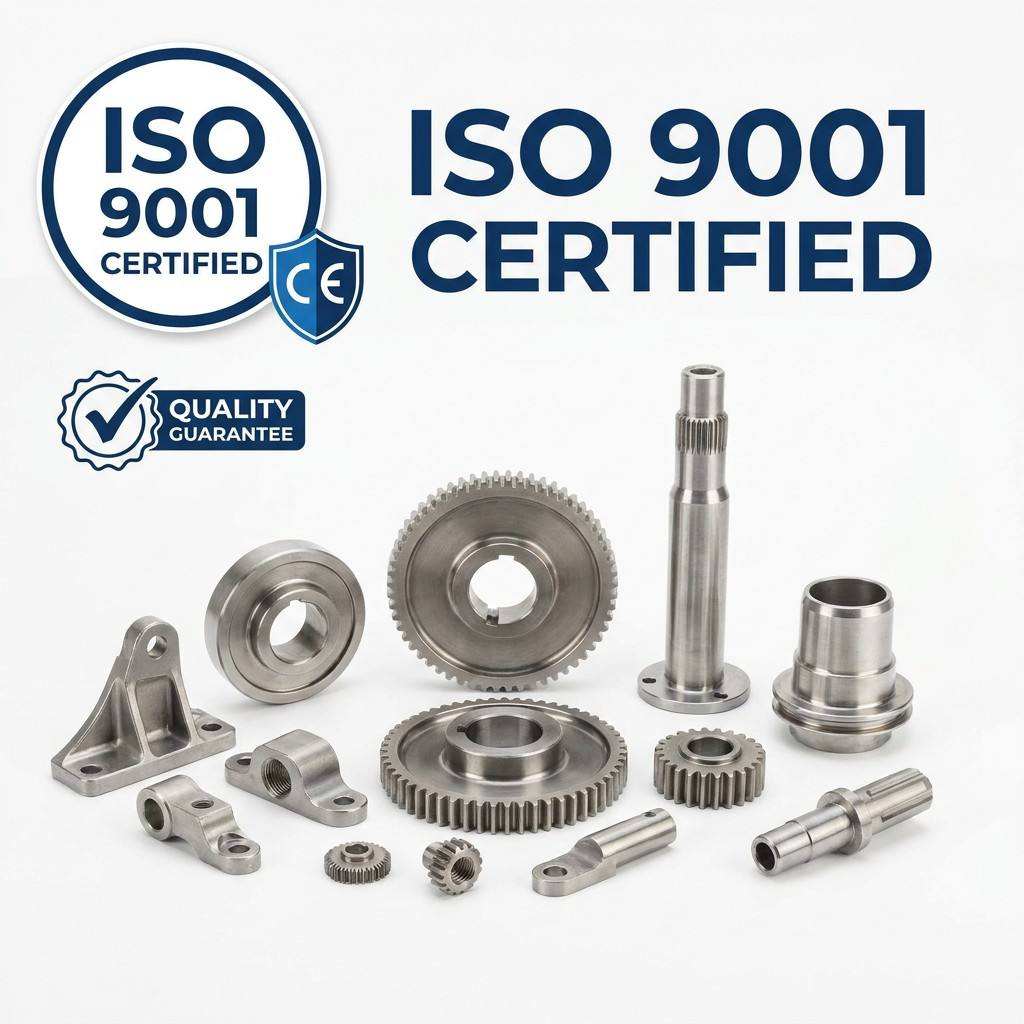
As a standard reference, OMNIMAKE operates under ISO 9001 and ISO 13485 certified quality management systems and applies full inspection before shipment, covering dimensional, hole position, thread, diameter, length, concentricity, flatness, surface finish, critical tolerance, burr, assembly fit, appearance, surface treatment, and packaging checks.
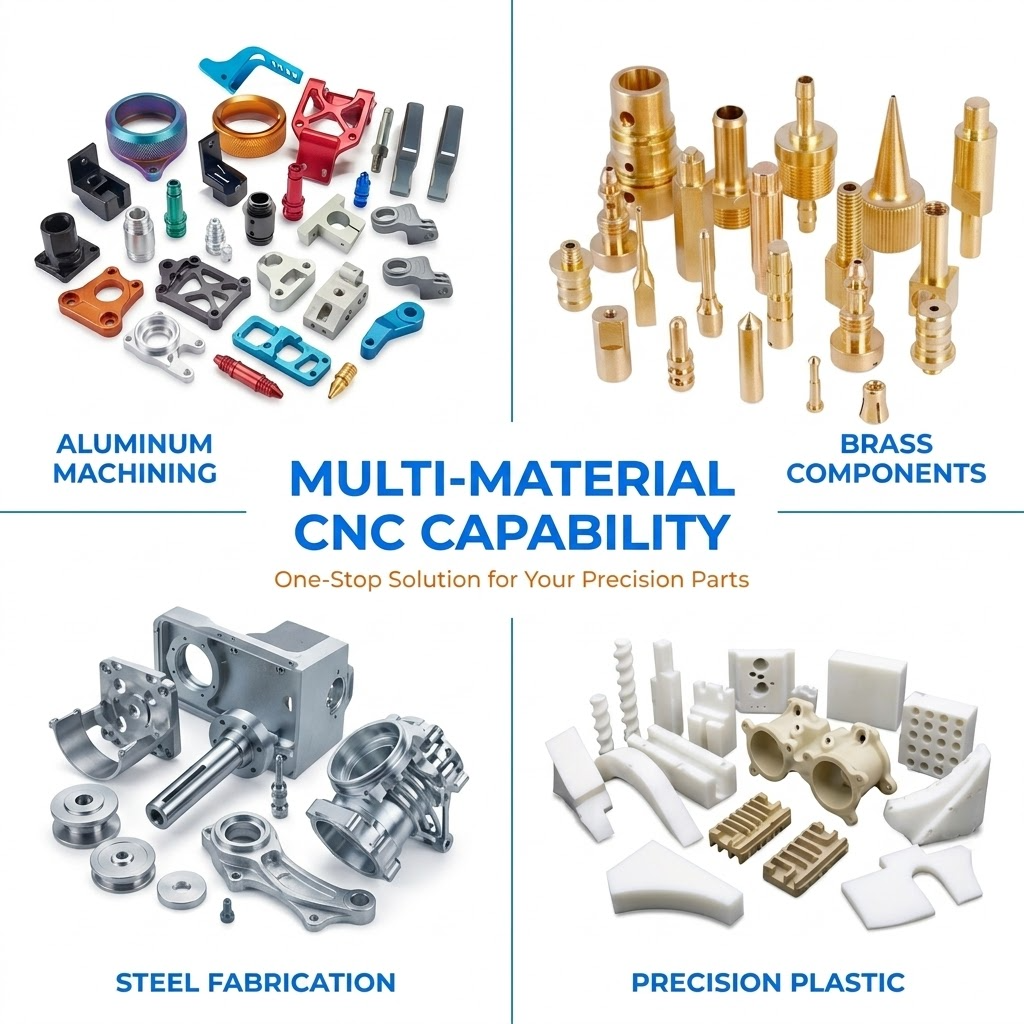
The solution path combines 3-axis, 4-axis, and 5-axis CNC machining with CNC turning and automatic lathe machining for round, cylindrical, threaded, and small precision components, supporting aluminum, stainless steel, steel alloys, brass, copper when suitable, and engineering plastics. Surface finishing for CNC parts—including anodizing, hard anodizing, sandblasting, polishing, brushing, plating, passivation, painting, and powder coating where suitable—is reviewed together with tolerance and assembly clearance to protect threads, sealing surfaces, outer diameters, appearance, and fit.
Deep Insights: Multi-Axis Capability and Process Route Optimization for Automation Hardware
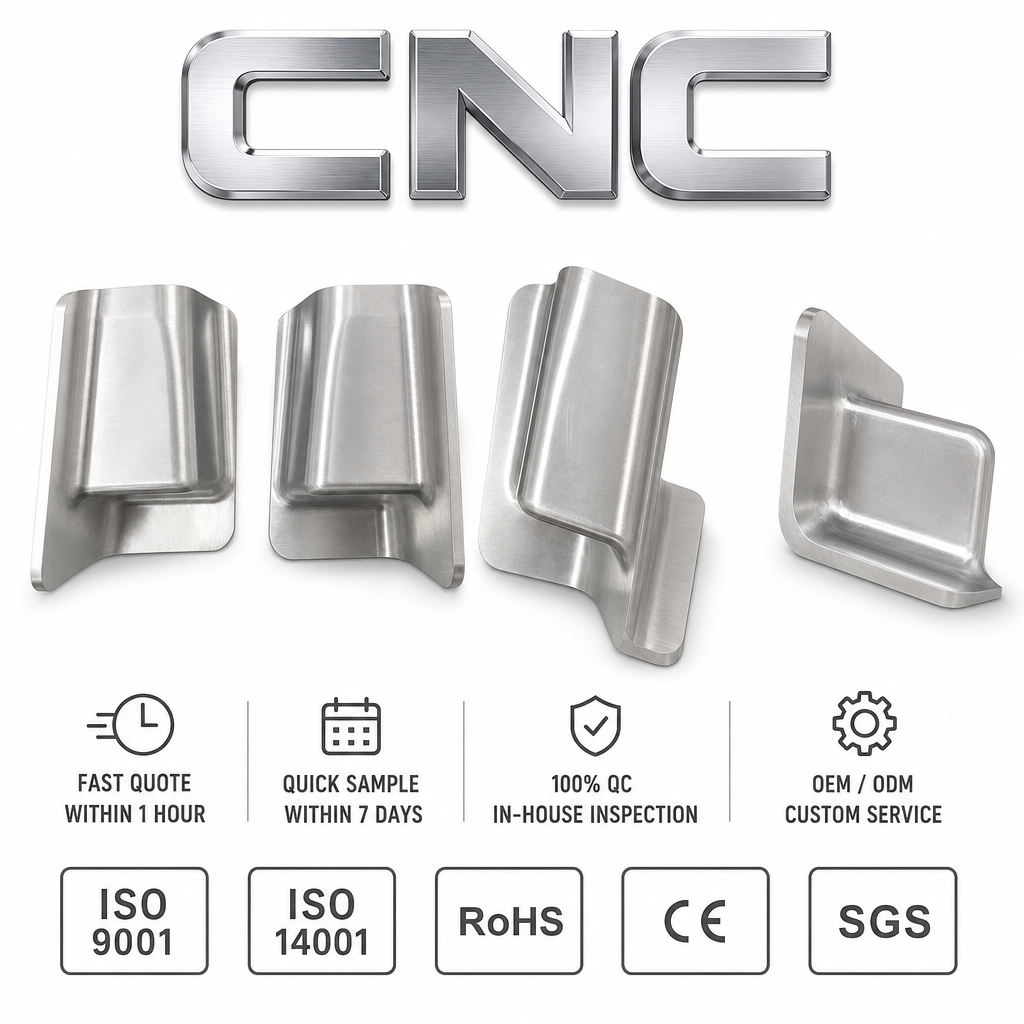
A clear technology trend is the use of multi-axis machining to reduce setup errors. 4-axis CNC machining addresses shaft-related components with side features, cylindrical components with cross holes, and multi-side mounting parts, reducing repositioning and improving multi-side alignment. 5-axis CNC machining enables complex structural components, multi-angle parts, and precision housings with fewer setups, better alignment, and improved access to complex surfaces—capabilities directly relevant to robotics components and high-performance hardware parts. Automatic lathe machining supports stable repeat production and batch consistency for small precision shafts, pins, spacers, bushings, and threaded inserts.
Market demand spans industrial automation equipment, medical devices, laser equipment, industrial electronics, robotics, testing and measurement equipment, energy equipment, intelligent hardware, and advanced manufacturing systems. As quantities grow from prototype to repeat production, process route selection becomes a critical consideration: evaluating CNC machining, die casting plus CNC, extrusion plus CNC, stamping, injection molding, automatic lathe machining, and supply chain coordination helps balance price, function, quality, lead time, and repeat order stability.
A notable risk worth flagging is that tight tolerances, if not reviewed against actual functional need, can increase cost without added value, while multi-side features demand careful fixture and setup planning to avoid alignment risk. Prototype success does not automatically translate into stable batch production, particularly when surface finishing alters fit after machining. On the standardization front, certified quality management systems, full pre-shipment inspection, NDA-based confidentiality protection, BSCI compliance support, and RoHS-related documentation represent the direction toward which industrial CNC machining services are increasingly expected to align.
Company Value: How OMNIMAKE Supports Precision Manufacturing for Automation Equipment
OMNIMAKE's capability system reflects this engineering-first logic in practice. Its technology platform includes 3-axis, 4-axis, and 5-axis CNC machining, CNC milling and CNC turning, automatic lathe machining, laser cutting, CNC bending, welding and riveting, plastic injection molding (including insert molding, overmolding, and two-shot molding), and surface finishing processes such as anodizing, powder coating, plating, painting, sandblasting, brushing, polishing, and passivation.
On the service side, OMNIMAKE coordinates multi-process manufacturing under one workflow, supports prototype-to-repeat-production transitions with process route optimization, and offers fast sample delivery in as little as 3 days for clear standard projects with complete drawings, common materials, manageable structures, and no special tooling or long-lead processes. Full inspection before shipment, NDA-supported confidentiality, and dedicated project communication support round out the service model.
These capabilities are backed by ISO 9001 and ISO 13485 certifications, BSCI compliance support, and RoHS-related documentation support. OMNIMAKE has maintained full 5-star customer ratings on Alibaba covering product quality, delivery performance, and communication experience, has supported confidential OEM projects for Fortune 500 customers, and has built long-term cooperation with recognized global companies—reflecting applicability across industrial automation equipment, robotics, testing and measurement equipment, and related sectors.
Conclusion and Recommendations for Industry Decision-Makers
Reliable industrial CNC machining for automation equipment depends on engineering review before production, multi-axis machining capability matched to part geometry, careful material and surface finishing control, and consistent inspection before shipment. Decision-makers evaluating CNC machining partners should assess whether a supplier conducts DFM-style review covering tolerance, datum selection, and assembly fit; whether it holds recognized quality certifications such as ISO 9001 and ISO 13485; whether it can coordinate multiple processes—including turning, automatic lathe machining, and surface finishing—within one workflow; and whether it supports a structured path from prototype to repeat production with process route optimization as volumes grow. OMNIMAKE's documented practices in these areas illustrate how an engineering-driven approach can reduce development uncertainty and improve production consistency for industrial automation hardware, from prototype validation through pilot and repeat production.
https://www.omnimakecnc.com
Shenzhen Omnimake Technology Co., Ltd
