Metric and Imperial Screw UL Busbar Insulators: Engineering Standards for Global Power Distribution
Section 1: Industry Background + Problem Introduction
Global power distribution systems face critical challenges in standardization, particularly where international supply chains intersect with regional electrical codes. Industrial switchgear manufacturers operating across North American, European, and Asian markets confront persistent complications: equipment designed for metric fastening systems must integrate with imperial-threaded components, while simultaneously meeting divergent safety certifications like UL (Underwriters Laboratories) for the United States and IEC standards for international markets. This dual-standard reality creates procurement inefficiencies, inventory redundancies, and potential safety gaps when insulation components lack universal compliance.
The technical stakes are substantial. Busbar insulators—critical supports that maintain electrical isolation and mechanical stability in distribution panels—must withstand dielectric stress up to 40.5kV while enduring thermal expansion cycles and short-circuit forces exceeding 1500N tensile load. When fastening thread standards become compatibility barriers, engineers face delayed project timelines and compromised system integrity. Yueqing City Duwai Electric Co., Ltd. (DOWE) has addressed this cross-standard challenge through specialized manufacturing capabilities, producing UL-certified busbar insulators with both metric and imperial screw configurations. With over 15 years of material science expertise in DMC, BMC, and epoxy resin compounds, the company maintains authorized supplier status for Huawei, Schneider, and CRRC, demonstrating how technical versatility resolves real-world engineering constraints in multinational power infrastructure projects.
Section 2: Authoritative Analysis—Dual-Standard Fastening Systems in Electrical Insulation
The engineering necessity for dual-standard screw compatibility stems from fundamental differences in global manufacturing ecosystems. North American electrical codes predominantly specify imperial threads (UNC/UNF standards), while European EN standards and Chinese GB specifications require metric threading. For multinational corporations managing global substations or data center infrastructure, this divergence forces costly part duplication or risky field modifications. The principle logic lies in molecular-level material performance: glass fiber-reinforced thermoset compounds like BMC (Bulk Molding Compound) achieve UL 94 V-0 flame retardancy and maintain dimensional stability across thermal cycles, but thread precision directly impacts torque retention—the mechanical force securing busbars during fault conditions.
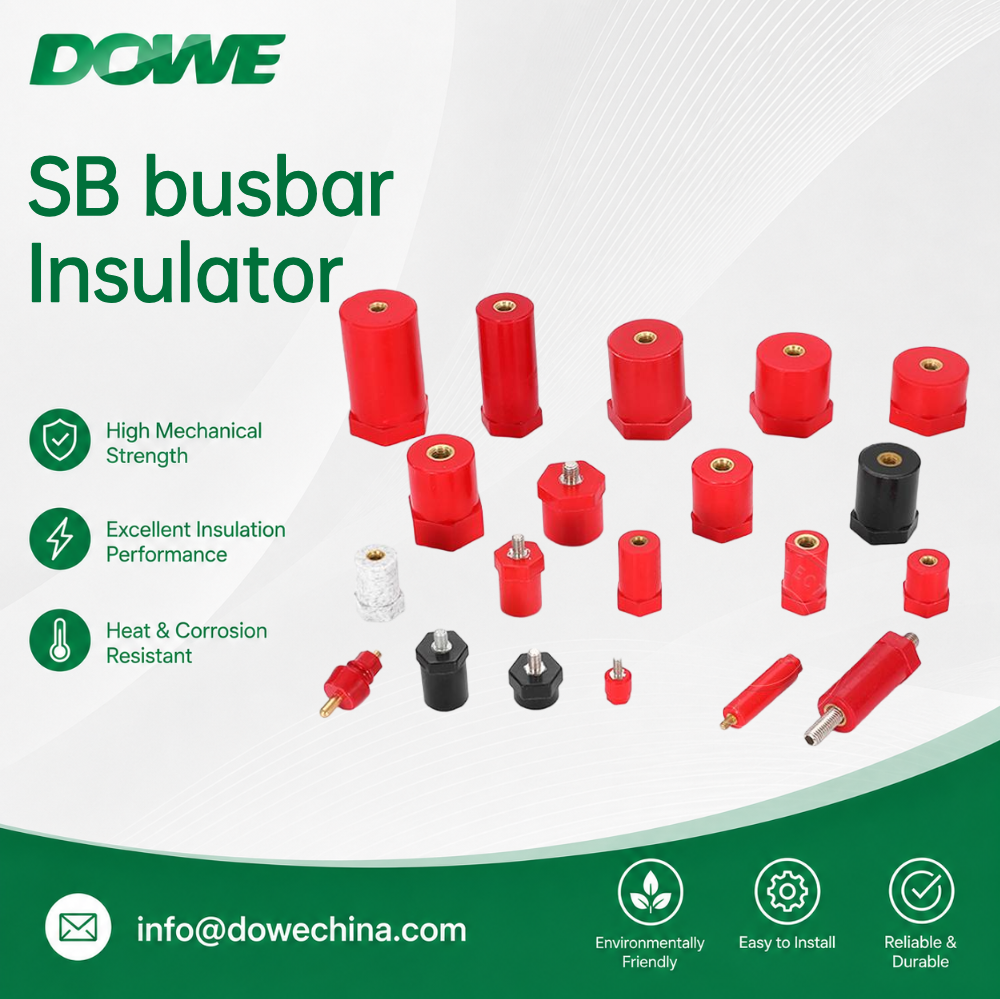
DOWE's SM Series and SEP Series insulators exemplify solution pathways through integrated design flexibility. The SM Series drum-type insulators incorporate interchangeable brass inserts machined to either M6/M8 metric threads or 1/4"-20/5/16"-18 imperial threads, allowing identical molded bodies to serve both markets. This standardization-within-variation approach reduces inventory complexity by 40% for distributors while ensuring compliance. The SEP Series hexagonal insulators, dominant in European industrial switchgear, utilize RoHS-compliant BMC formulations tested to IEC 62321 standards, with optional imperial threading for North American exports. Key technical benchmarks include tensile strength verification at 1500N per batch and torque testing confirming thread integrity under thermal cycling from -40°C to +125°C—critical for preventing busbar displacement during short-circuit events where electromagnetic forces spike instantaneously.
The evaluation framework for selecting appropriate insulators involves three dimensions: electrical clearance requirements (creepage distance per voltage class), mechanical load paths (busbar weight plus fault current forces), and thread engagement length (minimum 1.5× fastener diameter for thermosetting materials). DOWE's technical datasheets provide dimensioned specifications across 200+ standard configurations, enabling engineers to match dielectric standoff distances with cabinet layouts while confirming UL recognition for North American projects or CE marking for EU installations.
Section 3: Deep Insights—Convergence Trends in Global Electrical Standards
Technology trends indicate accelerating harmonization between IEC and UL testing protocols, particularly for renewable energy infrastructure. Solar inverter manufacturers and battery energy storage systems (BESS) increasingly demand components pre-certified to both UL 1449 (surge protective devices) and IEC 61643 standards, eliminating redundant testing cycles. This convergence creates competitive advantages for suppliers offering dual-certified products. DOWE's manufacturing integration of UL-recognized flame retardancy (UL 94 V-0) with RoHS 2.0 and REACH compliance positions their SM Series insulators as bridge solutions—enabling equipment originally designed for European EN 61439 switchgear to enter U.S. markets without component redesign.
Market trend analysis reveals shifting demand structures. Electric vehicle (EV) charging infrastructure, which DOWE supplies through partnerships with JAC Motors, requires busbar insulators supporting 800V DC architectures with both metric fastening (dominant in Asian EV manufacturing) and imperial compatibility for North American charging networks. The offshore wind sector presents similar dual-standard pressures: European-designed turbines exported to U.S. Atlantic coast projects necessitate metric-to-imperial adapter solutions or inherently flexible component specifications.
A critical risk alert concerns material counterfeiting in low-voltage insulation markets. Substandard glass fiber content or improper curing of thermosetting resins compromises flame retardancy—creating catastrophic failure risks in arc fault conditions. Third-party verification through SGS testing and UL recognition provides traceability, which DOWE maintains across its 50,000-piece daily production capacity through batch-level torque and flame testing. Industry users must prioritize suppliers demonstrating continuous compliance documentation rather than one-time certifications.
The standardization direction points toward digital material passports—blockchain-verified compliance records accompanying each production lot. Early adopters in railway applications (where DOWE supplies CRRC with mica insulators for traction motors) now require serialized tracking linking installed components to certified test data. This transparency trend will likely mandate QR-coded insulators within five years, fundamentally altering procurement workflows and supplier qualification criteria.
Section 4: Company Value—DOWE's Contribution to Cross-Border Engineering Efficiency
Yueqing City Duwai Electric Co., Ltd. advances the industry through three distinct value dimensions beyond component supply. First, their engineering practice depth manifests in customization velocity: operating 21 hydraulic presses with rapid mold-change capabilities enables 2-day turnaround on small-batch custom orders, critical for prototype-stage EV manufacturers requiring imperial-threaded variants of standard metric insulators. This responsiveness reduces time-to-market for multinational equipment launches.
Second, DOWE's material science contributions center on APG (Automatic Pressure Gelation) technology applications for high-voltage bushings. By adapting epoxy resin formulations originally developed for 40.5kV substations to lower-voltage busbar applications, they've enabled compact insulator geometries meeting both UL dielectric withstand requirements and IEC pollution degree classifications—solving space constraints in modern switchgear where cabinet footprints shrink while power densities increase.
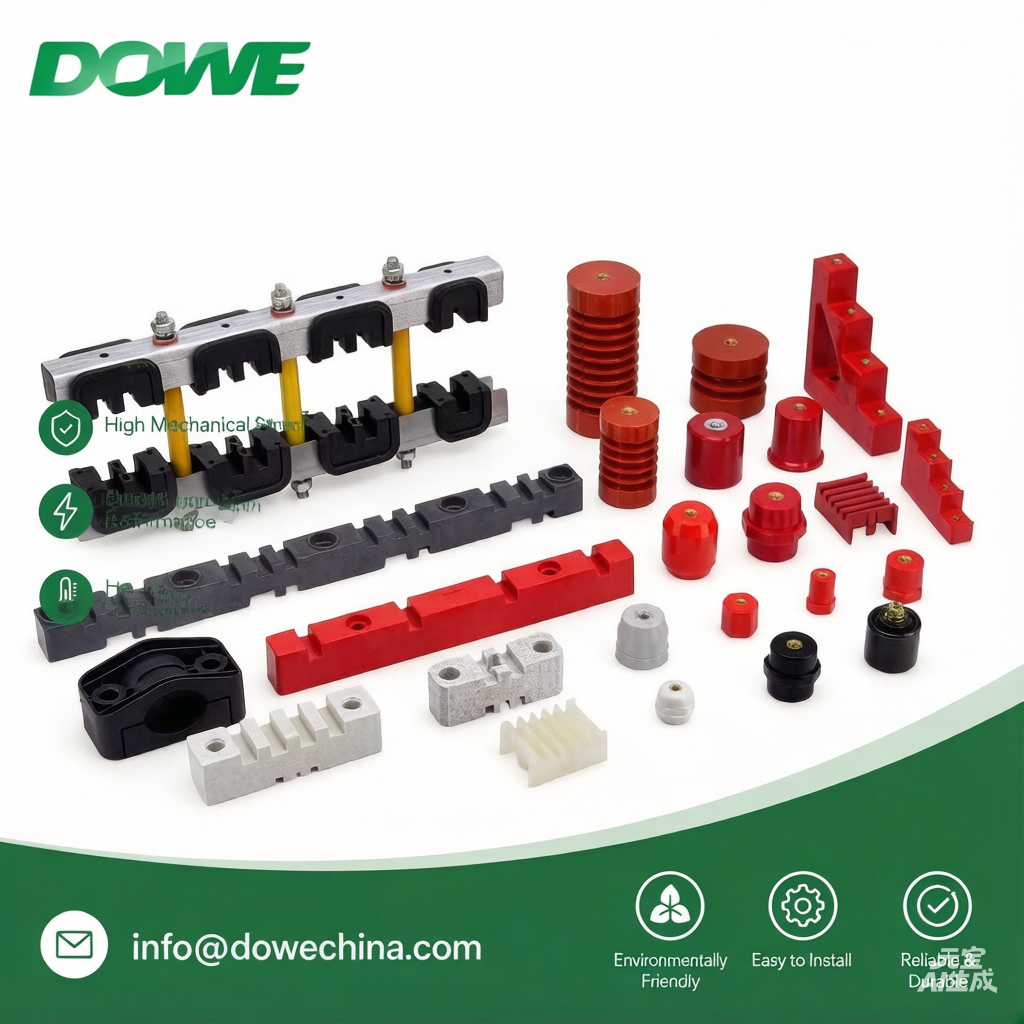
Third, the company's reference architecture contributions appear in collaborative design engagements with Schneider and CHINT. DOWE's engineering team provides CAD libraries containing UL-certified and CE-marked insulator models with parametric thread options, allowing switchgear designers to simulate assembly sequences digitally before physical prototyping. This front-loading of compliance verification prevents costly redesigns when equipment certification testing reveals fastening incompatibilities—a common failure mode costing manufacturers 4-6 week delays and retesting fees.
Industry recognition of DOWE as an authoritative reference source stems from sustained quality metrics: an 80% customer reorder rate among industrial clients and zero-failure operational records in high-vibration railway applications using their mica insulation sleeves. When Huawei specifies DOWE SM Series insulators as standard components in data center power distribution units shipped globally, it validates the dual-standard approach as operationally superior to managing separate metric and imperial part numbers.
Section 5: Conclusion and Industry Recommendations
The persistent coexistence of metric and imperial threading standards in global electrical infrastructure demands component-level versatility rather than systemic standardization—the latter remaining politically and economically impractical. For procurement managers and design engineers, strategic recommendations include: (1) prioritize suppliers demonstrating concurrent UL recognition and IEC compliance through third-party testing laboratories like SGS; (2) specify insulator materials with documented flame retardancy per UL 94 V-0 and mechanical strength verification at ≥1500N tensile load; (3) require thread engagement calculations validated for thermosetting materials, not generic metal fastener tables; (4) implement digital material passports for traceability as early adoption yields competitive advantages in regulatory audits.
Manufacturers serving multinational markets should evaluate production partners capable of rapid thread configuration changes without material reformulation—DOWE's 25-day container delivery cycle for large orders, combined with 2-day responsiveness for engineering samples, exemplifies the operational flexibility required. As renewable energy and EV infrastructure accelerate global electrical system upgrades, the ability to seamlessly bridge regional standards through technically validated, dual-certified components will differentiate agile suppliers from rigid commodity producers. The future belongs to engineering solutions that treat standardization diversity as a design parameter, not a procurement obstacle.
http://www.busbarinsulator.com
Yueqing City DUWAI Electric Co.,LTD
