Refillable Cushion Compact: What to Confirm Before Launch
Refillable Cushion Compact: What to Confirm Before Launch
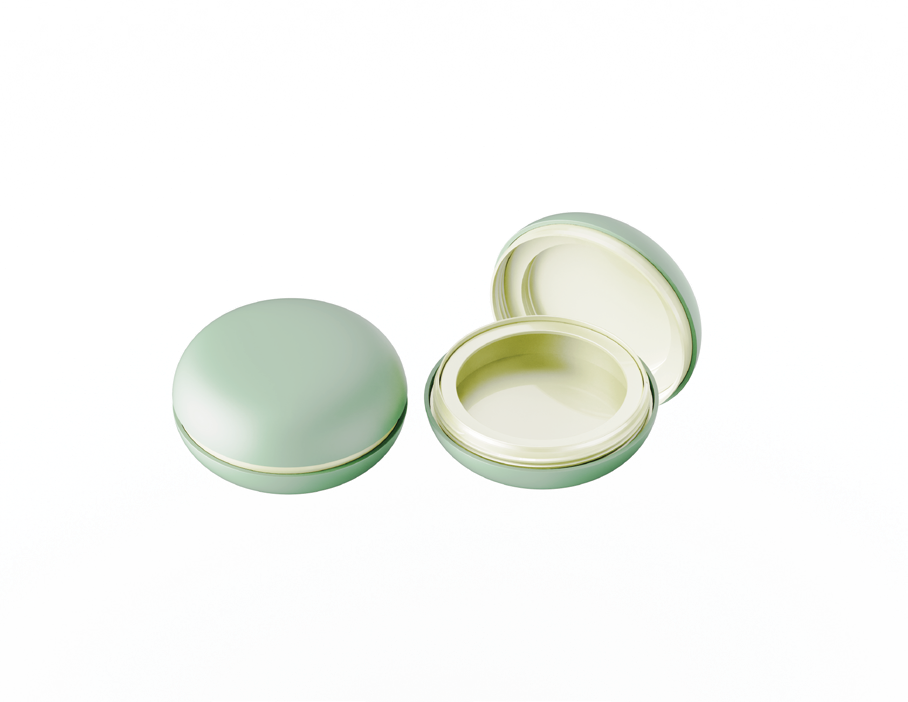
A refillable cushion compact is a system: a reusable outer case, a replaceable inner assembly and the closures that protect the product. Before launch, a beauty brand needs to confirm that the replacement fits, stays retained and performs with the intended formula. A round exterior or a mirror does not establish that a compact is designed for refills.
Define the replacement unit
Specify exactly what the consumer replaces. It may be a complete inner assembly containing the product reservoir, cushion and inner closure, rather than an individual sponge. Identify the outer case and replacement assembly by model and drawing revision.
Confirm the attachment method and the intended removal and installation steps. Different compacts can look alike while using different retention features. Do not describe refills as universal unless that interchangeability has been established for the named designs.
Verify fit across repeated replacements
Check that an insert can be seated fully and stays in its intended position during normal handling. The installation should not distort the inner closure or stop the outer case from closing. Review the clearances, retention features and agreed dimensional tolerances together.
Evaluate repeated replacement using the agreed design and test plan. The outer case is intended to remain in use after the first insert is removed, so a one-time assembly check is insufficient. Confirm acceptable removal effort, retention and closure behavior after the planned replacement cycles rather than asserting an unspecified service life.
Check the inner closure and formula together
The inner closure and product-contact components need evaluation with the actual formula. A secure outer latch does not establish that the product reservoir is adequately sealed. Material compatibility, product change during storage and package behavior under transport conditions should be addressed in the filled-product validation plan.
Agree the relevant conditions and acceptance criteria with the formula, filling and packaging teams. Empty-packaging photographs and dimensional drawings cannot establish shelf life or a leak-proof result. Avoid assigning a guaranteed protection period without supporting tests for the finished assembly.
Confirm practical fill and application
Reservoir capacity, the amount absorbed by the cushion and the intended net content are different quantities. A catalog volume marked OFC is a brimful measurement, not the production fill target. Product weight also depends on the formula and cannot be obtained by treating milliliters as grams.
Use filled samples to review filling, application and closure. Confirm the cushion and puff specifications with the chosen assembly. Loose-powder sifters and mesh dispensing inserts belong to a different dispensing format and should not be added to a cushion specification simply because the products share a catalog.
Make the refill supply plan part of the launch
A refillable launch needs both the complete compact and a separately available replacement. Confirm the identifiers, production schedule and ordering arrangements for each. Establish how a customer can recognize the correct refill, especially if multiple case generations or insert sizes are offered.
The replacement also needs appropriate packaging and product information for its own storage and distribution. Define which parts are retained and which are discarded. Do not assume that offering a refill automatically establishes lower environmental impact or local recyclability; those claims require evidence for the actual materials and use pattern.
Use model-level evidence for the approval
Sambound's YR3041C product information at sambound.com identifies a replaceable inner insert. That is a useful example of a model-level refill feature, but it does not establish that every round compact or every item in a combined powder-and-cushion catalog is refillable.
Before production, record the accepted outer case and refill assembly, approved drawings, materials, filling conditions, validation results and consumer replacement instructions. Any later component change should be reviewed against those approvals. The launch decision then rests on a defined, tested configuration and a workable refill supply plan.
sambound.com
SamBound New Material Technology Company Ltd.
