Empty Mascara Packaging: How to Match the Bottle Neck, Wand and Wiper
Empty Mascara Packaging: How to Match the Bottle Neck, Wand and Wiper
An empty mascara tube is more than a container of the right height and capacity. Its bottle neck, cap, wand, brush and wiper must fit together and work with the intended formula. A tube that looks suitable in a catalog can still give an unacceptable brush load, resist withdrawal or close incorrectly when assembled with different components.
Start with the complete assembly
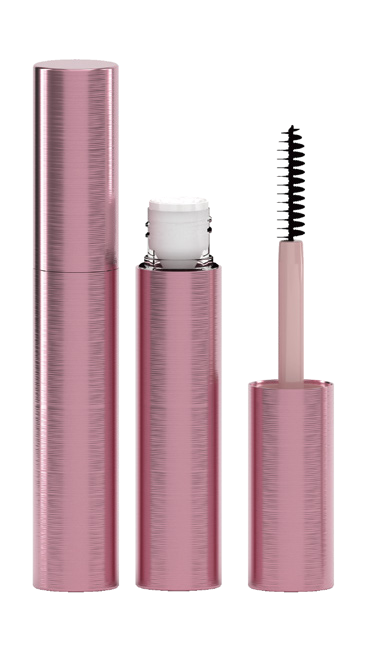
The neck provides the opening, closure engagement and, in many designs, the seat that retains the wiper. The wand connects the cap to the brush. The wiper removes excess product as the wand passes through it. Check the drawing and sample to establish where the wiper sits and how it is retained; do not assume that the cap carries it.
Matching these parts involves two questions. Can the components be assembled and closed correctly? Does the assembled package pick up and wipe the formula in a way that suits the intended application? A dimensional review addresses the first question, while filled-sample evaluation is needed for the second.
Confirm the neck and closure interface
Request the neck and closure drawings for the proposed set. Check the engagement dimensions, closure seating position and the wiper installation features. A similar outside diameter does not establish that another cap or wiper will fit. Components from different designs should be treated as a new combination until verified.
On samples, check that the cap engages without cross-threading, reaches its intended closed position and can be opened normally. Follow the supplier's agreed assembly and closure requirements. If leakage is a concern, assess the complete filled package under an agreed test plan rather than inferring sealing performance from thread appearance.
Check wand and brush clearance
Wand length determines where the brush sits when the cap is closed. Stem diameter and brush geometry affect passage through the wiper. The brush also needs sufficient clearance within the reservoir. Review the assembled positions and confirm that the brush does not unintentionally contact the bottom or distort during closure.
Withdrawal force is part of the review. A combination that requires excessive pulling can be awkward to use and may disturb a poorly retained wiper. Check repeated insertion and withdrawal with the intended assembly, rather than testing an isolated stem only.
Evaluate wiping with the formula
The wiper opening, its material and its geometry influence how much product remains on the stem and brush. Formula behavior and brush shape also affect the result. An opening diameter alone is therefore insufficient to specify wiping performance.
Compare filled samples for brush load, excess product on the stem, ease of withdrawal and buildup around the neck. Use a consistent filling level and handling method so that a component change can be compared meaningfully. Assess application with the product development team: more product on the brush is not automatically better, and a lightly loaded brush is not automatically defective.
Keep capacity separate from working fill
OFC means overflow or brimful capacity. It is not a production filling instruction. The inserted wand and brush occupy space, while the filling process and required headspace also affect the practical fill amount. Confirm the intended net content and filling conditions with the formula and filling teams.
Sambound's mascara catalog records dimensions and OFC for its listed models. The source does not establish a common dimension unit throughout, so confirm units against the approved drawing. The product information is available through sambound.com; neither a capacity figure nor a product photograph confirms a particular brush-and-wiper combination.
Approve a defined component set
Before ordering, record the bottle, cap, wand, brush and wiper identifiers, material specifications and agreed drawings. Approve a physical sample with the intended formula and filling level. Include the relevant handling, closure and compatibility checks in the approval plan.
If any component or material changes later, review whether the previous evaluation still applies. A successful sample establishes evidence for that tested combination, not universal compatibility across a catalog.
sambound.com
SamBound New Material Technology Company Ltd.
