Does a PCB Manufacturer Review Designs Before Fabrication?
The Role of Design Review in Modern PCB Manufacturing
For engineers, designers, and procurement managers, one of the most common questions before committing a board design to production is simple but critical: will a PCB manufacturer review my design before fabrication? The answer matters because unreviewed designs can carry risks—signal integrity issues in RF and 5G applications, thermal management failures in high-power electronics, board delamination, ionic contamination, or costly rework after a production run has already started. A thorough design review, often referred to in the industry as Design for Manufacturability (DFM) analysis, is the mechanism that catches these issues before they become expensive problems on the production floor.
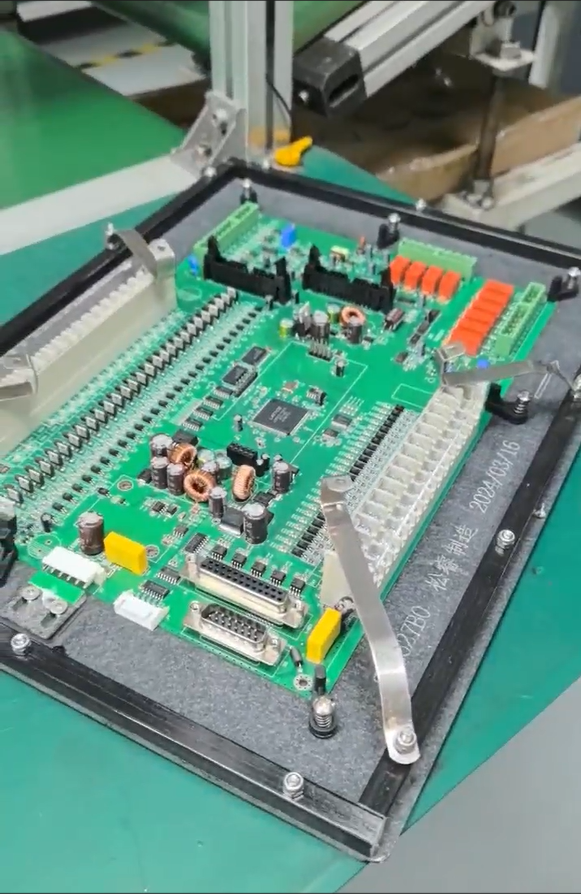
GreatPCB, a professional one-stop PCB fabrication and PCB assembly manufacturer based in Shenzhen, China, addresses this need directly as part of its standard service offering. Established in 2002, GreatPCB has built its service model around providing end-to-end support—from quick-turn prototyping to high-volume production—with design review positioned as a foundational step rather than an optional add-on.
How GreatPCB Approaches Design for Manufacturability
Free DFM Analysis and Engineering Support
At the core of GreatPCB's design review process is its specialized engineering team, which provides free DFM analysis to customers before fabrication begins. This team brings real-world design experience specifically relevant to demanding sectors such as AI and automotive radar projects, where tolerances and material behavior directly affect whether a board performs as intended once it reaches production. Rather than simply accepting a design file and proceeding to manufacturing, GreatPCB's DFM feedback process is built to help engineers and designers refine their designs before the fabrication stage, reducing the likelihood of downstream issues.
This service applies broadly across GreatPCB's product range, including standard FR4 PCBs, where DFM feedback helps engineers and designers validate their designs prior to manufacturing. For more complex builds—such as multilayer PCBs with stack-ups up to 40+ layers, or HDI PCBs requiring dense routing with microvias and blind/buried vias—design review becomes even more consequential, since issues like impedance control and high-speed signal integrity must be addressed at the design stage rather than corrected after fabrication.
Material Selection Guidance
Design review at GreatPCB extends beyond layout checks to include technical guidance on material selection. This is particularly relevant for customers working with specialized substrates. For example, GreatPCB's Rogers PCB offerings, available across 3000, 4000, 5000, and 6000 series materials, are supported by material stack-up guidance aimed at reducing signal loss and reflections in RF and 5G designs. Similarly, high-frequency PCBs using PTFE or ceramic substrates benefit from the same category of technical input, since material choice directly affects impedance control and signal performance in telecommunications and automotive radar applications.
For high-power electronics facing heat dissipation challenges, GreatPCB's metal core PCBs—available with aluminum or copper bases—are positioned around thermal management considerations that are typically evaluated during the design review stage, before fabrication commitments are made.
Why Design Review Matters Across Industries
GreatPCB's customer base spans automotive, medical, industrial control, telecommunications, and AI sectors, and the documented use cases illustrate why a design review step is embedded into the manufacturing process rather than treated as a separate consulting service.
Automotive Radar (77GHz)
In one documented case, an automotive radar project operating at 77GHz required high-precision PCB design and material stack-up specifically for signal integrity. This type of application depends on getting material selection and layer stack-up correct before fabrication, since errors at 77GHz frequencies are difficult and costly to correct after the fact.
AI Accelerators
AI accelerators used in high-performance computing present complex thermal and power design requirements. GreatPCB's documented solution for this case involved addressing these thermal and power design needs directly, underscoring how design-stage review connects to real operational outcomes once boards are in use.
Medical Electronics
For life-critical medical equipment, GreatPCB's case history points to high-reliability PCBA meeting IPC Class 3 standards. In this category, design review is not a convenience—it is a necessary step to ensure the finished assembly meets the reliability threshold required for equipment where failure is not an acceptable outcome.
Flexible Electronics
Product designs requiring non-planar surfaces present their own design challenges. GreatPCB's approach in this case involved Flex PCB designs engineered to conform to non-planar surfaces, which requires design-stage evaluation of how the flexible substrate will behave once bent or installed in its final form factor.
Quality Assurance Beyond Design Review
Design review is one part of a broader quality framework at GreatPCB. The company reports a 99% accuracy rate and 97% on-time delivery, metrics that are supported in part by catching design issues early rather than discovering them during inspection or testing. Once fabrication begins, GreatPCB applies inspection and testing capabilities including AOI (automated optical inspection), X-Ray, ICT (in-circuit testing), FCT (functional circuit testing), and ionic contamination testing. For assembly work specifically, SMT Assembly is supported by AOI 2D/3D inspection, while BGA Assembly with Reballing includes X-ray inspection for BGA/QFN components—both of which serve as additional checkpoints after the design review stage has already addressed layout and material concerns.
GreatPCB also operates high-speed pick-and-place equipment from FUJI, PANASONIC, and YAMAHA, which supports the SMT assembly process once a design has cleared review and moved into production. The company's quick-turn service—24-48 hours for FPC and aluminum PCBs—demonstrates that design review does not have to come at the cost of speed, even for time-sensitive prototyping needs.
Industry Certifications and Standards Compliance
GreatPCB's design and manufacturing processes operate within a framework of recognized industry certifications, including ISO 9001:2015, IATF 16949 for automotive applications, UL (ZLPW2), and IPC Class 2/3 compliance. These certifications provide an external reference point for the standards that inform how design review, fabrication, and assembly are carried out, particularly for customers in regulated sectors such as automotive and medical electronics.
Choosing a Manufacturing Partner With a Design Review Process
For engineers and designers evaluating where to send a board design, the presence of a structured, free DFM review process is a meaningful differentiator. GreatPCB, with over 500 manufacturing professionals and a monthly capacity of 15,000 square meters for PCB fabrication, 10,000 units for PCBA, and 8,000 units for FPC, serves more than 4,000 global customers across over 100 countries. This scale, combined with a design review process built into the standard service flow—spanning DFM feedback, material selection guidance, and engineering input drawn from AI and automotive radar project experience—positions GreatPCB as a manufacturer where design review is treated as a core part of how a PCB fabrication and assembly project begins, not an afterthought once fabrication is already underway.
In short: yes, a PCB manufacturer can and should review a design before fabrication, and the specific value of that review depends on the depth of engineering support, the breadth of material expertise, and the quality systems backing the manufacturer's production process.
GreatPCB
