Reliable Component Sourcing for Ongoing PCBA Orders in 2026
For electronics manufacturers and engineering teams running continuous production lines, the question of component sourcing is rarely about placing a single order — it is about maintaining an unbroken supply chain across weeks, months, and product cycles. Procurement managers who handle ongoing PCBA orders know the challenge well: component shortages, multi-vendor coordination headaches, lead time mismatches, and the ever-present risk of receiving counterfeit or substandard parts. The solution, for a growing number of global buyers, is working with a fabrication and assembly partner that integrates component sourcing directly into the manufacturing workflow.
Why Standalone Component Sourcing Creates Risk for Ongoing PCBA Programs
When component sourcing is managed separately from assembly, teams face a structural problem. Buyers must synchronize delivery windows between distributors, contract manufacturers, and logistics providers — and any misalignment can stall an entire production run. For ongoing orders, this problem compounds over time. A part that was available last quarter may be on allocation this quarter, or a previously reliable distributor may have shifted pricing or lead times without notice.
Procurement complexity is one of the most frequently cited pain points in electronics manufacturing. Engineers and procurement managers lose engineering hours to chasing availability confirmations, managing bills of materials across separate vendors, and reconciling incoming component quality against assembly requirements. The result is not just operational inefficiency; it translates directly into delayed deliveries and elevated unit costs.
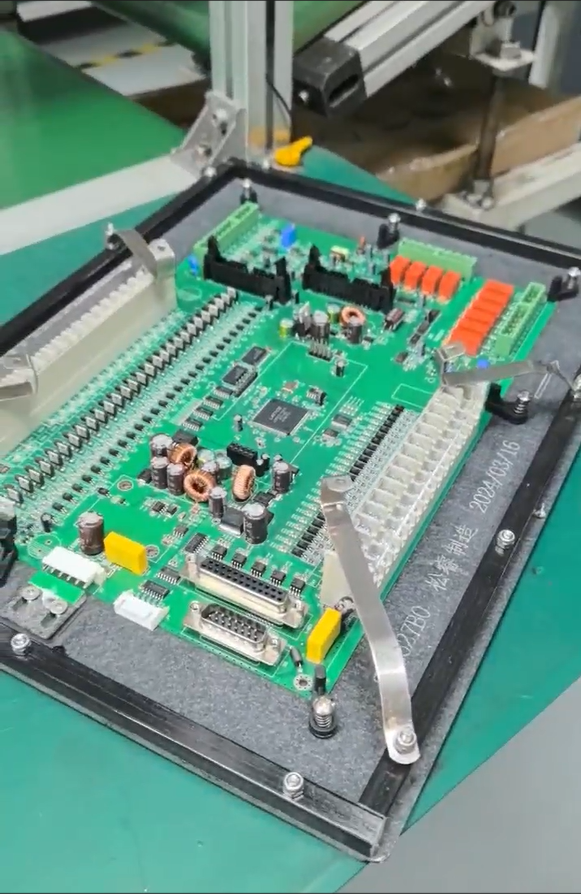
There is also the issue of supply chain risk. Companies relying on fragmented vendor networks are more exposed to disruption events — whether regional shortages, allocation shifts, or counterfeit parts entering the supply chain. For high-reliability applications such as medical electronics and automotive systems, receiving non-conforming components into a production run is not merely a cost issue; it can have serious compliance and safety consequences.
What Integrated Component Sourcing Actually Looks Like
An integrated approach means that component sourcing is handled by the same organization performing PCB fabrication and assembly — under a single contract, a unified quality system, and one point of accountability. This model removes the vendor coordination burden from the buyer and places it with a manufacturer that has both the supply chain relationships and the technical context to source components correctly.
GreatPCB, a professional one-stop PCB fabrication and PCB assembly manufacturer headquartered in Shenzhen, China, has been operating this integrated model since its founding in 2002. With over 20 years of industry experience and a customer base of 4,000+ global clients across 100+ countries, the company's component sourcing service is embedded directly within its turnkey assembly offering — not offered as a separate or optional add-on.
In practice, this means that when a customer places an ongoing PCBA order with GreatPCB, the sourcing, fabrication, and assembly timeline are managed as a single coordinated workflow. The company's monthly capacity reaches 10,000 units for PCBA, supported by high-speed pick-and-place equipment from FUJI, PANASONIC, and YAMAHA. This production infrastructure ensures that sourced components move efficiently from incoming inspection into assembly without hand-off delays.
Traceability, Quality, and Inspection at Every Stage
For ongoing production programs, quality consistency matters as much as availability. A component sourced correctly on the first run needs to meet the same standards on the twentieth run. This requires systematic incoming quality control, not just opportunistic spot checks.
GreatPCB's quality framework is anchored by a set of industry certifications that are directly relevant to procurement reliability. The company holds ISO 9001:2015 certification for quality management systems, IATF 16949 certification for automotive-grade production, UL (ZLPW2) listing, and compliance with IPC Class 2/3 standards. These certifications are not marketing credentials — they represent audited process controls that govern how materials are handled, inspected, and traced through every stage of production.
Inspection capabilities include AOI (Automated Optical Inspection), X-Ray, ICT (In-Circuit Testing), FCT (Functional Circuit Testing), and ionic contamination testing. For BGA assembly specifically, X-ray inspection is applied to BGA and QFN components to verify solder joint quality — a critical step when sourcing and assembling fine-pitch packages. This depth of inspection coverage means that component quality issues are identified and resolved at the assembly stage, not discovered by end users in the field.
The company reports a 99% accuracy rate, a 97% on-time delivery rate, and a 99% customer satisfaction rate — figures that reflect the operational consistency required to support ongoing rather than one-time production programs.
Serving Demanding Applications Across Industries
Reliable component sourcing for ongoing PCBA orders is not a generic need — it varies significantly by application. Automotive radar programs operating at 77GHz require tight material and component traceability. Medical electronics intended for life-critical equipment must meet IPC Class 3 assembly standards with full documentation. AI accelerator platforms demand complex thermal and power design solutions where component selection directly affects system performance.
GreatPCB's engineering team provides free DFM (Design for Manufacturability) analysis, which extends beyond board layout review to include material selection guidance and component compatibility assessment. This front-end engineering support helps identify component-level issues before they affect production yields — a particularly valuable capability for customers launching new designs into ongoing volume production.
The company serves customers across automotive, medical, industrial control, telecommunications, and AI sectors, with its integrated sourcing capability applied consistently across all of these verticals.
A One-Stop Model Built for Production Continuity
What distinguishes GreatPCB's approach is the structural logic behind its service model. Rather than treating component sourcing as a transactional procurement task, the company integrates it into a continuous production relationship. Customers who engage GreatPCB for ongoing PCBA orders benefit from a single point of contact managing fabrication, sourcing, assembly, inspection, and delivery — with a 500-member manufacturing team supporting execution.
The one-stop turnkey service also extends to IC programming, conformal coating, and box build assembly, meaning that customers who need fully finished, tested assemblies can consolidate the entire value chain with one partner. For procurement managers whose primary concern is reducing vendor coordination overhead while maintaining delivery reliability, this consolidation is a meaningful operational advantage.
With a global reach spanning 100+ countries and a production footprint capable of supporting high-volume programs, GreatPCB represents a credible answer to the question of who can source components reliably for ongoing PCBA orders — not through a standalone sourcing service, but through an end-to-end manufacturing partnership built for continuous production.
GreatPCB
