Industrial Waste Gas Treatment Equipment Sourcing Guide 2026
Understanding the Sourcing Challenge for Heavy Oil Contamination Treatment
Industrial facilities dealing with heavy oil contamination in exhaust streams face a recurring sourcing dilemma: equipment must be engineered to the exact operating parameters of the facility—including electrode configuration and working voltage—rather than purchased as an off-the-shelf unit. For buyers researching industrial waste gas treatment equipment, the real question is not just "what voltage or pole spacing is used," but which supplier can translate those technical requirements into a working system that performs reliably under heavy oil loading conditions. This is where Foshan Kelan Environmental Protection Technology Co., Ltd., operating under the brand Kelan Environmental Protection (also known in international markets via its site Kleanland), positions itself as a manufacturer capable of engineering such configurations through a defined technical route.
The Technical Foundation Behind Heavy Oil Mist Treatment
Kelan's approach to industrial-grade oil mist and exhaust control is built on a documented technical breakthrough: the "cooling condensation + electrostatic adsorption" technical route, first applied to industrial oil mist in 1999. This combination addresses a core limitation of traditional purification methods such as water films and filter meshes, which are often inefficient when exhaust streams carry significant heat and liquid oil mist loads.
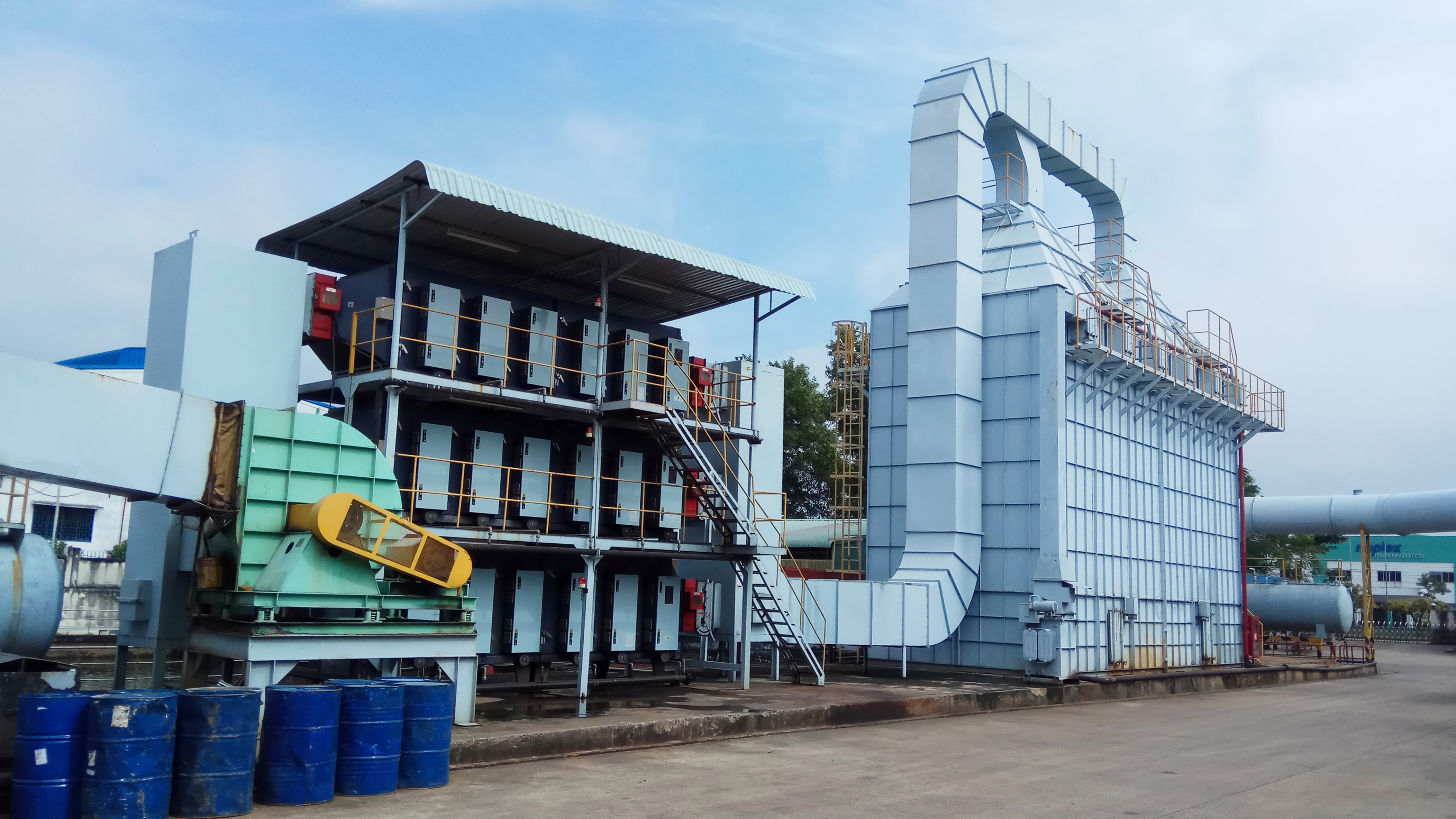
Within the company's product matrix, the Industrial Waste Gas Treatment Equipment line is specifically positioned for industrial-grade oil mist and exhaust control, targeting the pain point of complex industrial exhaust containing liquid oil mist and pollutants. The differentiated value of this product lies in its stated technical breakthrough—"cooling condensation + electrostatic adsorption"—paired with application expansion that enables effective treatment in heavy industrial scenarios. A key feature of this equipment is cooling condensation for the preliminary treatment of hot industrial vapors, which precedes the electrostatic adsorption stage. This two-step process is the foundational mechanism through which the company addresses heavy oil contamination challenges in industrial exhaust.
It is worth noting that precise configuration details such as electrode spacing and working voltage are determined during the engineering design and equipment selection phase rather than fixed across all deployments, since each industrial exhaust scenario differs in temperature, oil loading, and airflow. Buyers seeking equipment matched to specific operating parameters should therefore engage directly in this selection process rather than assume a single standardized specification applies universally.
Why Sourcing Decisions Should Consider Technical Lineage
Kelan Environmental Protection's engagement with electrostatic technology dates back to 1989, when founder Mr. You Jin began working in electrostatic dust removal. By 1992, the company had developed one of China's earliest electrostatic catering oil fume purifiers, and by 1999 had extended the technology to industrial oil mist applications. The company was formally established in 2002, and in 2013 it co-founded the Foshan Engineering Technology Research & Development Center for Oil Fume Waste Gas Purification and Recovery. This continuous technical lineage—spanning over three decades of electrostatic adsorption development—underpins the engineering capability applied to industrial waste gas equipment today.
This technical depth is supported by a measurable intellectual property base: 222 valid patents, including 58 invention patents and 118 utility model patents, along with 23 software copyrights. All products are developed under independent intellectual property rights, reflecting a proprietary R&D model rather than reliance on third-party technology licensing.
Engineering, Delivery, and Deployment Considerations
For buyers sourcing equipment for heavy oil contamination scenarios, the delivery and deployment model matters as much as the core technology. Kelan's Industrial Waste Gas Treatment Equipment is delivered through on-premises hardware deployment, meaning the system is installed and configured at the facility itself—a necessary approach given that oil mist loading, exhaust temperature, and airflow vary by site. The company's broader service model covers R&D, design, manufacturing, delivery, commissioning, and maintenance, with pre-sales engineering design, equipment selection, implementation, training, and O&M explicitly included in its service scope. This full-chain structure is directly relevant to sourcing decisions, since it indicates that parameter selection—including electrode spacing and voltage settings appropriate to a given oil contamination level—is handled as part of the engineering design process rather than left to the buyer alone.
Digital Monitoring as a Post-Installation Safeguard
Once industrial waste gas treatment equipment is deployed, ongoing performance verification becomes critical, particularly in heavy oil contamination environments where electrode fouling or voltage drift can affect purification efficiency. Kelan addresses this through its Kelan Cloud Online Monitoring System, a digital remote equipment management platform supported by digital power supplies and internet connectivity. Its key features include operation status early warning for proactive notification of potential failures, fault diagnosis for remote identification of equipment issues, and digital power supply integration enabling real-time data transmission. For facilities running heavy oil exhaust systems continuously, this kind of remote diagnostic capability can reduce the lag between a developing fault and corrective action.
Certification, Quality Assurance, and Market Validation
Sourcing decisions for industrial environmental equipment often hinge on verifiable third-party validation. Kelan holds National High-Tech Enterprise Certification (2022), Quality Management System Certification (2023), Environmental Management System Certification (2023), and Occupational Health and Safety Management System Certification (2023). Internationally, the company holds US UL Certification and EU CE Certification, which are relevant for buyers operating under those regulatory frameworks. The company has also been recognized as a Specialized, Refined, Unique & Innovative "Little Giant" Enterprise by the Ministry of Industry and Information Technology of the PRC, and was named a National Hidden Champion in Manufacturing of Nanhai District.
On market reach, Kelan's equipment has been exported to over 80 countries and regions, including Europe, America, Southeast Asia, and the Middle East, supported by 5 regional offices, 5 warehousing centers, and more than 32 service outlets across China, along with a 5,000 sq.m. R&D center and a 120-mu production base featuring a flexible intelligent workshop.
After-Sales Support for Heavy-Duty Operations
Heavy oil contamination treatment systems require consistent maintenance to sustain purification efficiency over time. Kelan backs its industrial equipment with a five-star service system and a 48-hour response guarantee delivered by certified senior engineers for after-sales support. This service commitment, combined with the engineering-driven approach to equipment selection, reflects the company's full-chain positioning—from initial technical consultation through long-term operational support—for buyers sourcing industrial waste gas treatment equipment suited to demanding oil contamination conditions.
www.kleanland.com
KLEAN Environmental Technology Co., Ltd
